





 AACXSS vs Manual Purchasing Processes
ACXSS vs Manual Purchasing Processes
Understanding the Difference
Every organization purchases goods and services. The question is whether those purchases are managed through structured, automated workflows or through manual processes such as spreadsheets, emails, paper forms, phone calls, and vendor websites.
Manual purchasing processes may work for smaller organizations, but as purchasing volume, locations, vendors, and operational complexity increase, they often create inefficiencies, limited visibility, and unnecessary costs.
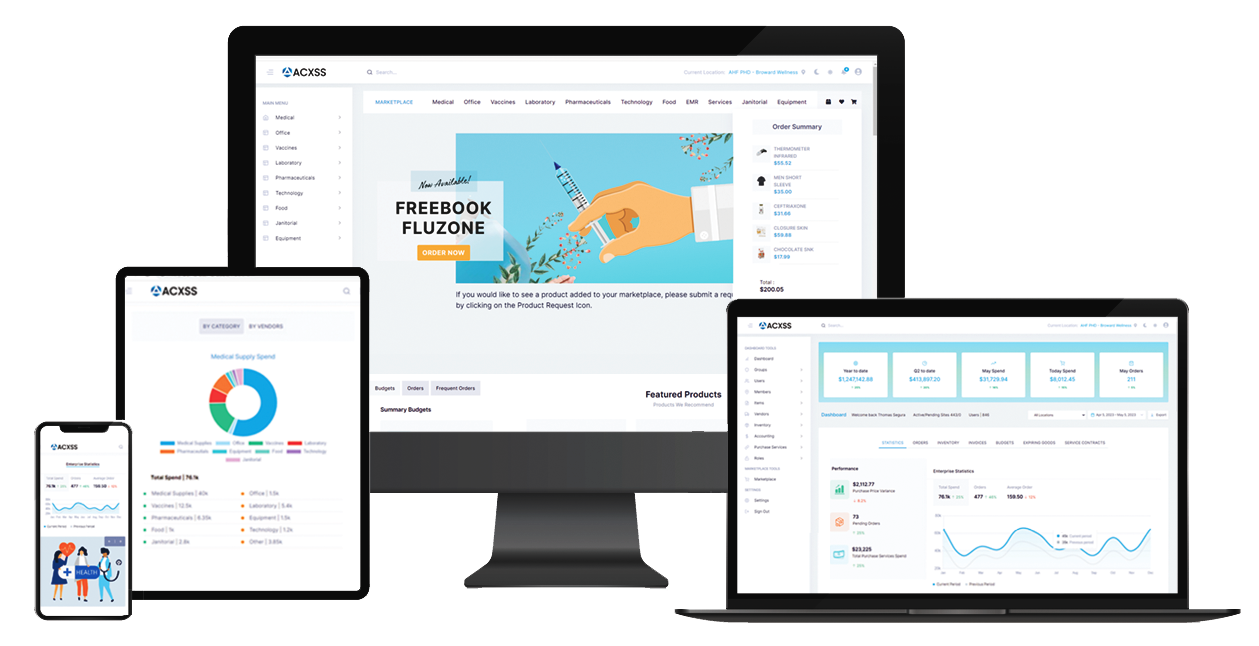
ACXSS provides a centralized platform designed to automate purchasing, inventory management, invoice processing, approvals, and spend visibility across the organization.
The comparison is not simply software versus spreadsheets — it is about operational control, visibility, and scalability.
What Are Manual Purchasing Processes?
Manual purchasing processes typically rely on disconnected tools and communication methods that make it difficult to maintain visibility, consistency, and control across the organization.
 Email requests
- Paper purchase requests
- Spreadsheets
- Vendor websites
- Phone orders
- Manual approvals
- Manual invoice processing
- Separate inventory tracking systems
In many organizations, purchasing information exists in multiple places, making it difficult to gain a complete view of spending activity. While these processes may seem manageable initially, they often become increasingly difficult to control as organizations grow.
Why Healthcare Organizations Choose ACXSS
Healthcare organizations face unique purchasing challenges due to high transaction volumes, clinical inventory requirements, and multi‑facility operations. Manual processes often create bottlenecks, delays, and limited visibility.
- Multiple facilities
- Large supplier networks
- Clinical inventory requirements
- Complex approval workflows
- High transaction volumes
ACXSS helps healthcare organizations:
- Centralize purchasing
- Improve inventory visibility
- Automate invoice processing
- Strengthen budget controls
- Reduce supply costs
- Improve vendor management
- Increase operational efficiency
Organizations such as physician groups, community health centers (CHCs), federally qualified health centers (FQHCs), urgent care networks, ambulatory surgery centers (ASCs), long‑term care facilities, and health systems frequently move from manual purchasing processes to centralized procurement platforms to improve operational performance.
Side-by-Side Comparison
The Hidden Costs of Manual Purchasing
Many organizations evaluate software costs without fully understanding the cost of manual processes. Manual purchasing often creates hidden expenses that impact staff time, visibility, accuracy, and financial performance.
Staff Time
Employees spend valuable time on manual tasks such as:
- Entering data
- Following up on approvals
- Reconciling invoices
- Tracking orders
- Updating spreadsheets
These activities consume resources that could be spent on higher‑value work.
Lack of Visibility
When purchasing information is spread across multiple systems, organizations often struggle to answer basic questions:
- How much are we spending?
- What are we purchasing?
- Which vendors receive the most spend?
- Are purchases within budget?
- Are we purchasing on contract?
Without visibility, controlling costs becomes significantly more difficult.
Approval Delays
Manual approvals often result in:
- Lost emails
- Approval bottlenecks
- Delayed purchasing decisions
- Slow invoice processing
Automated workflows help organizations move purchases and invoices through the approval process more efficiently.
Increased Risk of Errors
Manual processes increase the likelihood of:
- Duplicate orders
- Duplicate payments
- Incorrect pricing
- Missing approvals
- Data entry errors
Even small mistakes can create significant financial and operational consequences.
Purchasing Visibility: Manual vs ACXSS
Manual Environment
Leadership often relies on:
- Spreadsheet reports
- Vendor statements
- Accounting exports
- Department feedback
Information is frequently outdated by the time it reaches decision‑makers.
ACXSS Environment
Leadership gains access to:
- Real‑time purchasing activity
- Vendor spend reporting
- Budget performance
- Inventory visibility
- Invoice status
- Approval activity
This visibility supports faster and more informed decision‑making.
Inventory Management: Manual vs ACXSS
Manual Inventory Management
Organizations often track inventory through:
- Excel spreadsheets
- Physical counts
- Visual inspections
- Employee memory
Common challenges include:
- Stockouts
- Overstocking
- Expired products
- Inaccurate inventory counts
ACXSS Inventory Management
ACXSS provides:
- Real‑time inventory visibility
- Par level management
- Cycle counting
- Utilization tracking
- Replenishment recommendations
- Multi‑location inventory reporting
Invoice Processing: Manual vs ACXSS
Manual Accounts Payable
Invoices are often:
- Received by email
- Printed and routed manually
- Entered into accounting systems
- Tracked through spreadsheets
ACXSS Invoice Automation
ACXSS helps automate:
- Invoice capture
- Approval workflows
- Two‑Way Matching
- Three‑Way Matching
- Exception management
- Invoice reporting
Purchasing Analytics: Manual vs ACXSS
Manual Reporting
Organizations often spend hours gathering data from:
- Accounting systems
- Vendor reports
- Purchasing spreadsheets
- Inventory records
Reports may already be outdated when completed.
ACXSS Analytics
ACXSS provides visibility into:
- Purchasing trends
- Vendor performance
- Inventory utilization
- Budget compliance
- Purchased services spending
- Supply chain activity
Why Organizations Move Away from Manual Purchasing
Organizations often outgrow manual purchasing processes when they experience:
- Rapid growth
- Multiple locations
- Increasing purchasing volume
- Inventory management challenges
- Budget control requirements
- Rising administrative workload
At a certain point, manual processes become difficult to scale. Technology helps create consistency, visibility, and accountability.
When Manual Purchasing May Still Be Appropriate
Manual purchasing may be sufficient if:
- The organization operates a single location
- Purchasing volume is low
- Inventory requirements are minimal
- Approval workflows are simple
When ACXSS May Be the Better Choice
ACXSS may be a strong fit if your organization wants to:
- Improve purchasing visibility
- Reduce manual work
- Strengthen approval controls
- Manage inventory more effectively
- Automate invoice processing
- Reduce supply costs
- Improve vendor oversight
- Gain real‑time analytics
- Standardize purchasing across locations
Frequently Asked Questions
Is procurement software better than spreadsheets?
For organizations with multiple locations, growing purchasing volume, or inventory management requirements, procurement software typically provides greater visibility, efficiency, and control than spreadsheet‑based processes.
What are the risks of manual purchasing?
Common risks include approval delays, duplicate purchases, inventory shortages, limited visibility, invoice errors, and inconsistent purchasing practices.
How does ACXSS improve purchasing efficiency?
ACXSS centralizes purchasing, automates approvals, manages inventory, streamlines invoice processing, and provides real‑time spend visibility.
Can ACXSS replace manual purchasing workflows?
Yes. ACXSS helps organizations replace spreadsheets, email approvals, paper processes, and disconnected systems with a centralized procurement platform.
What is the biggest advantage of ACXSS over manual purchasing?
The biggest advantage is visibility. Organizations gain real‑time insight into purchasing, inventory, invoices, budgets, vendors, and operational spending from a single platform.
Ready to Learn More?
Explore how modern procurement platforms help organizations eliminate manual processes, improve visibility, strengthen inventory management, automate invoice processing, and streamline purchasing across every location.
See how ACXSS centralizes purchasing, inventory, accounts payable automation, vendor management, analytics, and financial controls into one connected platform—helping organizations move beyond spreadsheets and email‑based workflows.
SEO Metadata
SEO Title
ACXSS vs Manual Purchasing Processes | Modern Procurement vs Spreadsheets
Meta Description
Compare ACXSS and manual purchasing processes. Learn how procurement software improves purchasing visibility, inventory management, invoice automation, approvals, and operational efficiency.
Keywords
Primary Keywords
- Manual Purchasing Processes
- ACXSS Procurement Platform
- Procurement Software
- Inventory Management Software
- Invoice Automation Software
- Accounts Payable Automation
- Spend Management Platform
Secondary Keywords
- Manual vs Automated Purchasing
- Procurement Workflow Automation
- Operational Procurement Tools
- Supply Chain Visibility
- Budget Control Software
- Healthcare Procurement Solutions
- Multi‑Location Purchasing Management
High-Intent Search Phrases
- ACXSS vs Manual Purchasing Processes
- Replace Spreadsheet Purchasing Workflows
- Best Procurement Software for Healthcare
- How to Improve Purchasing Visibility
- Automate Invoice Processing
- Centralized Procurement Platform
- Manual Purchasing Limitations