





 ACXSS vs ERP Procurement Modules
ACXSS vs ERP Procurement Modules
Which Procurement Solution Is Right for Your Organization?
Many organizations assume that because they have an Enterprise Resource Planning (ERP) system, they already have everything needed to manage purchasing, inventory, approvals, invoices, and operational spending.
While ERP systems provide valuable financial and accounting functionality, procurement modules within ERPs are often designed to support financial recordkeeping rather than day‑to‑day procurement operations.
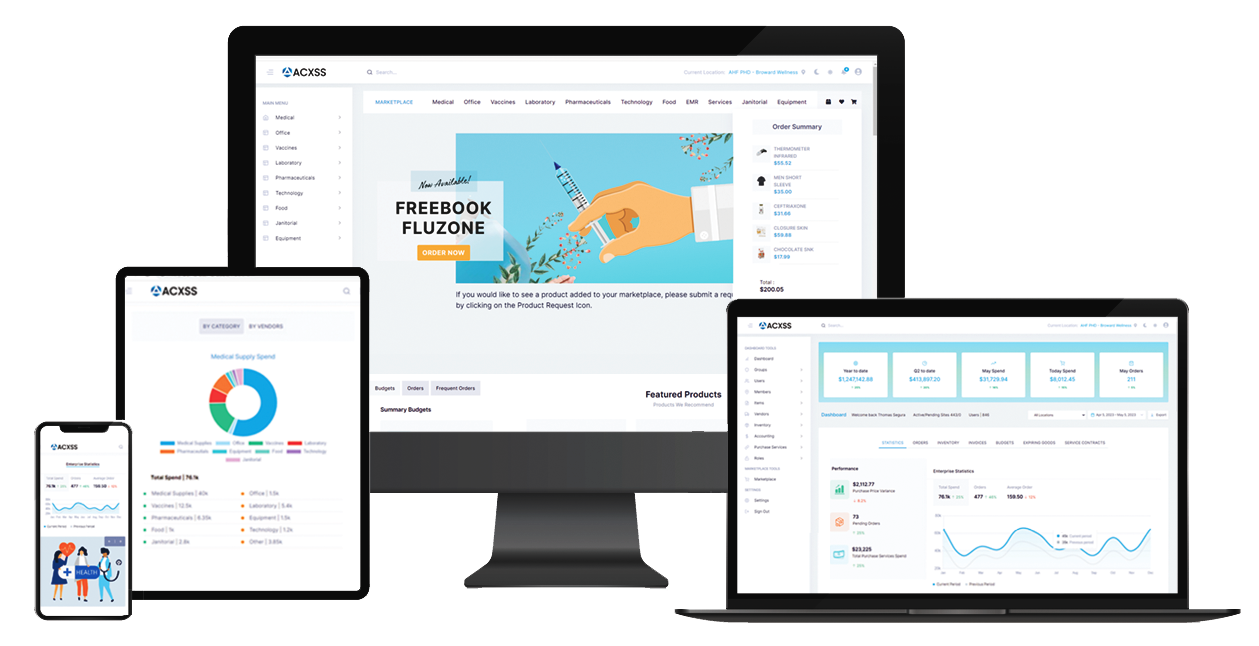
ACXSS is designed specifically to help organizations manage purchasing, inventory, invoice automation, approvals, vendor relationships, and spend visibility across the entire Procure‑to‑Pay lifecycle.
The question is not whether ERP systems are important. The question is:
Is your ERP procurement module providing the visibility, automation, and operational efficiency your organization needs?
ERP Procurement Modules: Built for Financial Management
ERP systems are primarily designed to support core financial operations. Procurement functionality is often included, but typically as one component within a much larger financial management system.
 General Ledger
- Financial Reporting
- Budgeting
- Accounts Payable
- Accounts Receivable
- Fixed Assets
- Financial Compliance
Many ERP platforms include procurement modules, but these modules are often designed to support financial recordkeeping rather than day‑to‑day procurement operations.
Common ERP systems with procurement modules include:
- NetSuite
- Microsoft Dynamics 365
- Sage Intacct
- Blackbaud Financial Edge NXT
- MIP Fund Accounting
These systems excel at financial management but are not always optimized for procurement‑intensive organizations operating across multiple locations.
ACXSS: Built for Operational Procurement and Spend Management
ACXSS was designed specifically to support operational procurement, inventory management, invoice automation, vendor relationships, and spend visibility across the entire Procure‑to‑Pay lifecycle.
- Procurement
- Purchasing
- Inventory Management
- Invoice Automation
- Accounts Payable Automation
- Vendor Management
- Purchased Services Management
- Budget Controls
- Supply Chain Visibility
- Spend Analytics
- Predictive Ordering
Rather than serving as a general accounting platform, ACXSS focuses on improving operational efficiency and spend control throughout the organization.
Feature Comparison
Why Organizations Add ACXSS Alongside Their ERP
Many organizations discover that their ERP is excellent at recording transactions but less effective at managing procurement workflows.
Limited User Adoption
ERP procurement modules are often designed for finance teams rather than operational users. This can create friction for:
- Clinic managers
- Department leaders
- Purchasing teams
- Inventory coordinators
ACXSS provides a streamlined user experience focused on day‑to‑day procurement activities.
Limited Visibility Across Locations
Organizations operating multiple locations often struggle to consolidate purchasing data. ACXSS provides centralized visibility across:
- Locations
- Departments
- Vendors
- Inventory
- Purchased services
This allows leadership teams to identify trends and savings opportunities more effectively.
Inventory Management Challenges
Many ERP procurement modules provide basic inventory capabilities but lack operational tools such as:
- Par level management
- Utilization tracking
- Cycle counting
- Replenishment recommendations
- Predictive ordering
ACXSS was designed to address these operational requirements.
Invoice Processing Inefficiencies
Manual invoice processing remains a challenge for many organizations. ACXSS helps automate:
- Invoice capture
- Approval workflows
- Two‑Way Matching
- Three‑Way Matching
- Exception management
- Payment preparation
This reduces administrative workload and improves financial controls.
Limited Procurement Analytics
Most ERP reporting is designed for financial reporting. ACXSS provides operational analytics focused on:
- Purchasing trends
- Vendor performance
- Inventory utilization
- Contract compliance
- Purchased services spending
- Supply chain visibility
These insights help organizations make more informed purchasing decisions.
ACXSS Complements Your ERP
One of the most common misconceptions is that organizations must choose between a procurement platform and an ERP. In reality, most organizations use both.
ERP Responsibilities
- General Ledger
- Financial Reporting
- Budget Management
- Accounting
- Financial Compliance
ACXSS Responsibilities
- Procurement
- Purchasing
- Inventory Management
- Invoice Automation
- Vendor Management
- Supply Chain Visibility
- Spend Analytics
- Predictive Ordering
Together, the two systems create a more complete Procure‑to‑Pay ecosystem.
Why Healthcare Organizations Choose ACXSS
Healthcare organizations often manage:
- Multiple facilities
- Thousands of products
- Large supplier networks
- Complex approval workflows
- Inventory‑intensive operations
These organizations require more than financial reporting — they need operational visibility.
ACXSS helps:
- Physician Groups
- Community Health Centers (CHCs)
- Federally Qualified Health Centers (FQHCs)
- Urgent Care Networks
- Ambulatory Surgery Centers (ASCs)
- Long‑Term Care Organizations
- Health Systems
ACXSS helps these organizations gain control over purchasing, inventory, invoices, and operational spending while continuing to leverage their existing ERP investment.
When an ERP Procurement Module May Be Enough
An ERP procurement module may adequately meet your needs if:
- You operate a single location
- Purchasing volume is relatively low
- Inventory management is minimal
- Procurement workflows are simple
- Advanced reporting is not required
Organizations with more complex operational requirements often benefit from a dedicated spend management platform.
When ACXSS May Be the Better Fit
ACXSS may be a better fit if your organization wants to:
- Improve purchasing visibility
- Strengthen inventory management
- Automate invoice processing
- Reduce supply costs
- Standardize purchasing across locations
- Improve vendor oversight
- Gain actionable spend analytics
- Implement predictive ordering
- Enhance supply chain visibility
Frequently Asked Questions
Do I need ACXSS if I already have an ERP?
Many organizations use ACXSS alongside their ERP. ACXSS focuses on procurement, inventory, spend management, and operational workflows, while the ERP remains the system of record for accounting and financial reporting.
Does ACXSS replace my ERP?
No. ACXSS is designed to complement ERP systems by providing enhanced procurement, inventory, invoice automation, and spend management capabilities.
Can ACXSS integrate with ERP systems?
Yes. ACXSS integrates with many ERP and accounting platforms, including NetSuite, Microsoft Dynamics 365, Sage Intacct, Blackbaud, MIP, and QuickBooks Online.
Why not just use the ERP procurement module?
ERP procurement modules often provide foundational functionality but may lack advanced procurement workflows, inventory management, supply chain visibility, predictive ordering, and operational analytics.
What is the biggest advantage of ACXSS?
The biggest advantage is centralized visibility and control across purchasing, inventory, invoices, vendors, contracts, and operational spending from a single platform.
Ready to Learn More?
Explore how operational procurement platforms help organizations overcome the limitations of ERP procurement modules, improve visibility across locations, streamline purchasing workflows, and strengthen inventory management.
See how ACXSS complements your ERP by centralizing procurement, inventory, accounts payable automation, vendor management, analytics, and supply chain visibility into one connected platform.
SEO Metadata
SEO Title
ACXSS vs ERP Procurement Modules | Which Procurement Solution Is Right for Your Organization?
Meta Description
Compare ACXSS and ERP procurement modules. Learn the differences between procurement software and ERP purchasing tools, inventory management, invoice automation, spend visibility, and supply chain management.
Keywords
Primary Keywords
- ERP Procurement Modules
- ACXSS Procurement Platform
- Business Spend Management
- Procurement Software
- Inventory Management Software
- Invoice Automation Software
- Accounts Payable Automation
Secondary Keywords
- ERP vs Procurement Software
- Procure-to-Pay Visibility
- Operational Procurement Tools
- Supply Chain Visibility
- Contract Management Software
- Budget Controls & Approvals
- Healthcare Procurement Solutions
High-Intent Search Phrases
- ACXSS vs ERP Procurement Modules
- Best Procurement Software for Healthcare
- ERP Procurement Limitations
- Unified Procurement and Inventory Platform
- How to Improve Purchasing Visibility
- Procurement Automation for Multi-Location Organizations
- ERP Integration with Procurement Platforms