





 ACXSS vs Point Solutions
ACXSS vs Point Solutions
Understanding the Difference
Organizations often invest in software to solve specific operational challenges. One system may be used for inventory management, another for invoice processing, and a separate platform for analytics, vendor management, contract storage, or purchasing workflows.
These individual applications are commonly referred to as Point Solutions because each one is designed to solve a specific problem. While point solutions can be effective, organizations frequently discover that managing multiple disconnected systems creates complexity, limits visibility, and increases administrative overhead.
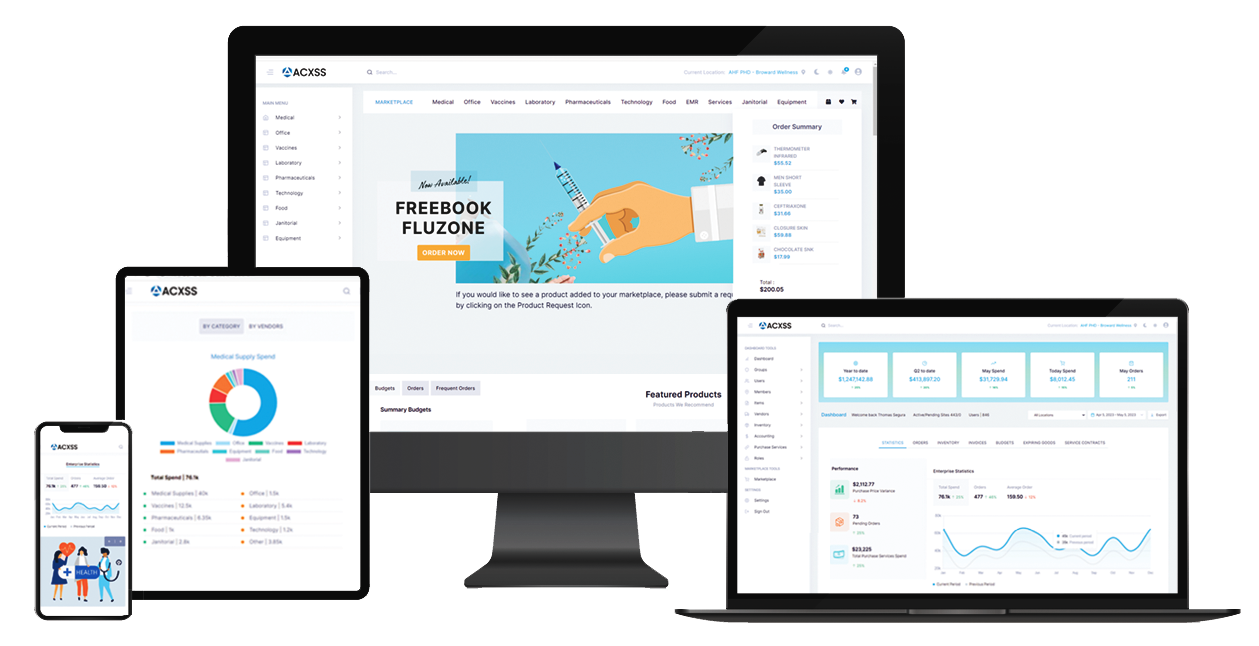
ACXSS takes a different approach. Instead of managing procurement, inventory, invoice automation, analytics, vendor management, and operational spend across multiple platforms, ACXSS brings these functions together within a single Business Spend Management platform.
The question becomes: Is it better to manage multiple systems or operate from a unified platform?
What Is a Point Solution?
A point solution is software designed to address a single operational requirement. Organizations often rely on multiple point solutions to manage different parts of the Procure-to-Pay and supply chain process.
 Inventory Management Software
- Invoice Automation Software
- Accounts Payable Automation Software
- Contract Management Software
- Vendor Management Software
- Analytics Platforms
- Purchasing Systems
- Approval Workflow Tools
Each application may perform its specific function well. However, organizations often need several systems to manage the entire Procure-to-Pay and supply chain process.
What Is a Unified Spend Management Platform?
A unified platform combines multiple operational functions within a single solution. Rather than managing separate systems, users access all core spend management capabilities through one centralized platform.
- Procurement
- Purchasing
- Inventory Management
- Invoice Automation
- Accounts Payable Automation
- Vendor Management
- Contract Management
- Purchased Services Management
- Analytics & Reporting
- Budget Controls
- Supply Chain Visibility
This creates a more connected operational environment where purchasing, inventory, accounts payable, and analytics work together seamlessly.
Side-by-Side Comparison
The Challenge with Point Solutions
Most organizations do not intentionally create fragmented technology environments — they evolve over time. A typical scenario may look like:
- Procurement platform implemented in Year 1
- Inventory solution added in Year 2
- Invoice automation software added in Year 3
- Analytics platform added in Year 4
- Contract repository added in Year 5
Eventually, organizations find themselves managing multiple vendors, multiple logins, multiple integrations, and multiple sources of truth.
Visibility: Unified Platform vs Multiple Systems
Point Solution Environment
Information often exists in separate systems. Leadership teams may need to gather data from:
- Procurement software
- Inventory software
- Accounts payable systems
- ERP platforms
- Analytics tools
Building a complete operational picture can be time-consuming.
ACXSS Environment
Purchasing, inventory, invoices, vendors, budgets, and analytics are connected within a single platform. Decision-makers gain visibility into:
- What was purchased
- What was received
- What was invoiced
- What was paid
- What inventory remains
- How spending impacts budgets
All without moving between systems.
User Adoption and Operational Efficiency
Point Solutions
Employees often need to learn:
- Multiple systems
- Multiple workflows
- Multiple login credentials
- Multiple reporting tools
This can create friction and increase training requirements.
ACXSS
Users work within a single environment for:
- Purchasing
- Inventory
- Approvals
- Invoice processing
- Reporting
This creates a more consistent user experience and simplifies onboarding.
Reporting and Analytics
Point Solutions
Reporting often requires:
- Exporting data
- Combining spreadsheets
- Reconciling information
- Building custom reports
Data may not always align between systems.
ACXSS
Reporting is built around a unified data model. Organizations can analyze:
- Purchasing trends
- Inventory utilization
- Vendor spending
- Invoice activity
- Budget performance
- Purchased services spend
All from a single source of truth.
Integration Complexity
Point Solutions
Organizations often need to connect:
- Procurement software
- Inventory software
- AP software
- ERP systems
- Reporting platforms
The more systems involved, the more complex the environment becomes.
ACXSS
ACXSS consolidates multiple operational functions into one platform, reducing integration requirements and simplifying administration.
Vendor Management
Point Solutions
Organizations may manage relationships with:
- Multiple software vendors
- Multiple support teams
- Multiple contracts
- Multiple renewal cycles
This increases administrative complexity.
ACXSS
Organizations work with a single platform provider for multiple operational functions. Benefits include:
- Simplified support
- Reduced vendor management
- Unified implementation strategy
- Consistent product roadmap
Total Cost of Ownership
Many organizations focus on subscription pricing when evaluating software. However, total cost of ownership often includes:
- Licensing fees
- Implementation costs
- Integration costs
- Training costs
- Support costs
- Administrative effort
While individual point solutions may appear less expensive initially, organizations often discover that maintaining multiple platforms increases long-term costs.
Why Healthcare Organizations Are Moving Toward Unified Platforms
Healthcare organizations face growing pressure to reduce operational costs, improve visibility, strengthen compliance, standardize processes, and improve financial performance.
Unified platforms help organizations create consistency across:
- Purchasing
- Inventory
- Accounts Payable
- Vendor Management
- Analytics
- Financial Controls
Why Healthcare Organizations Choose ACXSS
Healthcare organizations often operate:
- Physician Groups
- Community Health Centers (CHCs)
- Federally Qualified Health Centers (FQHCs)
- Urgent Care Networks
- Ambulatory Surgery Centers (ASCs)
- Long-Term Care Facilities
- Health Systems
These organizations require visibility across locations, departments, vendors, inventory, and spending activity. ACXSS helps organizations manage these functions through a centralized Business Spend Management platform rather than multiple disconnected point solutions.
When Point Solutions May Make Sense
Point solutions may be appropriate when:
- A very specific operational need exists
- Procurement complexity is limited
- Purchasing volume is relatively low
- Integration requirements are minimal
For organizations seeking enterprise-wide visibility and operational alignment, a unified platform may provide greater long-term value.
When ACXSS May Be the Better Choice
ACXSS may be a strong fit if your organization wants to:
- Consolidate technology platforms
- Improve purchasing visibility
- Strengthen inventory management
- Automate invoice processing
- Reduce administrative complexity
- Improve reporting accuracy
- Gain supply chain visibility
- Standardize operations across locations
Frequently Asked Questions
What is a point solution?
A point solution is software designed to solve a specific operational problem such as inventory management, invoice automation, or contract management.
What is a unified spend management platform?
A unified spend management platform combines multiple operational functions—including procurement, inventory, invoice automation, analytics, and vendor management—within a single system.
Why do organizations replace point solutions?
Organizations often replace multiple point solutions to improve visibility, reduce complexity, simplify reporting, and lower administrative overhead.
Is ACXSS a procurement platform or a spend management platform?
ACXSS is a Business Spend Management platform that includes procurement, inventory management, invoice automation, accounts payable automation, analytics, vendor management, and operational spend visibility.
What is the biggest advantage of ACXSS over multiple point solutions?
The biggest advantage is centralized visibility and operational control across the entire purchasing, inventory, and accounts payable lifecycle from a single platform.
Ready to Learn More?
Explore how unified spend management platforms help organizations eliminate fragmented systems, improve visibility, streamline purchasing, strengthen inventory management, and automate invoice processing.
See how ACXSS centralizes procurement, inventory, accounts payable, vendor management, analytics, and financial controls into one connected platform.
SEO Metadata
SEO Title
ACXSS vs Point Solutions | Unified Spend Management vs Multiple Software Systems
Meta Description
Compare ACXSS and point solutions. Learn how a unified spend management platform improves procurement, inventory management, invoice automation, analytics, visibility, and operational efficiency.
Keywords
Primary Keywords
- Point Solutions
- Unified Spend Management
- Business Spend Management Platform
- Procurement Software
- Inventory Management Software
- Invoice Automation Software
- Accounts Payable Automation
- Vendor Management Platform
Secondary Keywords
- Procure-to-Pay Visibility
- Operational Efficiency Tools
- Supply Chain Visibility
- Contract Management Software
- Analytics & Reporting Tools
- Budget Controls & Approvals
- Healthcare Spend Management
High-Intent Search Phrases
- ACXSS vs Point Solutions
- Unified Spend Management Platform
- Benefits of Unified Platforms
- Challenges with Point Solutions
- How to Consolidate Procurement Systems
- Healthcare Spend Management Software
- Centralized Procurement and AP Automation